
Table of Contents
- Introduction
- Understanding AI Governance in Modern Enterprises
- Why AI Transformation Is a Problem of Governance
- Key Governance Challenges in AI Implementation
- Building an Effective AI Governance Framework
- Implementing AI Governance Across Your Organization
- Real-World AI Governance Failures and Successes
- The Future of AI Governance
- Conclusion
- Frequently Asked Questions
Introduction
Artificial intelligence promises to revolutionize industries, streamline operations, and unlock unprecedented value for organizations worldwide. Yet despite massive investments in AI technologies, many enterprises struggle to move beyond pilot projects to meaningful, enterprise-wide transformation. The culprit isn’t inadequate technology or insufficient data—it’s governance.
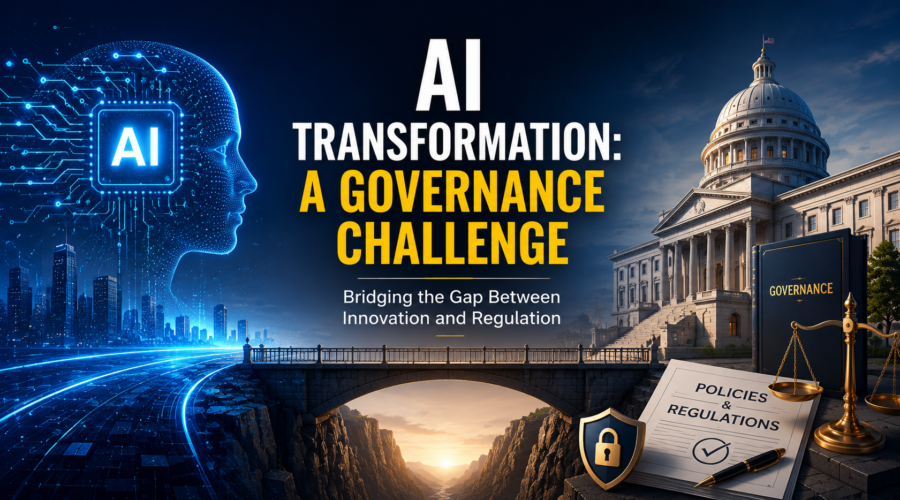
The reality is stark: ai transformation is a problem of governance far more than it is a problem of technology. Organizations that treat AI as purely a technical initiative, without establishing robust governance structures, ethical frameworks, and accountability mechanisms, find themselves mired in compliance issues, ethical dilemmas, and failed implementations.
According to recent research, only 13% of AI projects make it into production, with governance gaps cited as a primary barrier. This comprehensive guide explores why governance sits at the heart of successful AI transformation and provides actionable strategies for building frameworks that enable responsible, scalable, and sustainable AI adoption.
Understanding AI Governance in Modern Enterprises
What Is AI Governance?
AI governance encompasses the policies, procedures, standards, and accountability structures that guide how organizations develop, deploy, and manage artificial intelligence systems. It’s the framework that ensures AI initiatives align with business objectives, regulatory requirements, ethical standards, and societal expectations.
Unlike traditional IT governance, AI governance must address unique challenges including algorithmic bias, data privacy, model explainability, autonomous decision-making, and rapid technological evolution. It requires cross-functional collaboration between technology teams, legal departments, risk management, ethics boards, and business leaders.
Core Components of AI Governance
Policy Framework
Establishes organizational principles, standards, and guidelines for AI development and deployment. This includes acceptable use policies, ethical guidelines, and compliance requirements.
Risk Management
Identifies, assesses, and mitigates risks associated with AI systems, including security vulnerabilities, bias, accuracy issues, and regulatory non-compliance.
Accountability Structures
Defines roles, responsibilities, and decision-making authority for AI initiatives. Clear ownership ensures someone is answerable for AI system outcomes.
Monitoring and Auditing
Implements continuous oversight mechanisms to track AI system performance, detect anomalies, ensure compliance, and validate that systems operate as intended.
Transparency and Explainability
Requires that AI decisions can be understood, explained, and challenged by stakeholders, particularly in high-stakes applications.
The Governance Gap in AI Initiatives
Most organizations approach AI transformation with enthusiasm but without adequate governance preparation. They invest heavily in data infrastructure, machine learning platforms, and technical talent while neglecting the governance structures necessary to scale responsibly.
This governance gap manifests in several ways:
- Siloed AI projects that don’t align with enterprise strategy
- Inconsistent standards across different business units
- Compliance violations due to unclear data usage policies
- Public relations disasters from biased or unethical AI applications
- Wasted investments in AI solutions that can’t be productionized
The absence of governance doesn’t just slow AI adoption—it actively undermines it. When employees don’t trust AI systems, when regulators scrutinize your practices, or when customers question your ethics, transformation stalls regardless of technical sophistication.
Why AI Transformation Is a Problem of Governance
The Misconception of Technology-First AI
The prevailing narrative around AI transformation centers on technology: better algorithms, more powerful computing, larger datasets. While these elements matter, they represent only one piece of the puzzle. Organizations that prioritize technology over governance discover too late that they’ve built sophisticated systems they can’t responsibly deploy.
Consider this reality: ai transformation is a problem of governance because technology alone cannot resolve questions of ethics, accountability, fairness, or societal impact. These are fundamentally governance challenges requiring policy frameworks, oversight mechanisms, and organizational cultures that prioritize responsible innovation.
Governance as an Enabler, Not an Obstacle
Many leaders view governance as a constraint that slows innovation. This perspective is backwards. Effective governance actually accelerates AI transformation by:
Building Trust
When stakeholders trust that AI systems are governed responsibly, adoption increases. Employees embrace AI tools, customers accept AI-driven services, and regulators approve AI applications.
Enabling Scale
Governance frameworks provide the consistency and standards necessary to move from isolated pilots to enterprise-wide deployment. Without governance, each AI project reinvents the wheel.
Reducing Risk
Proactive governance identifies and mitigates risks before they become crises. This prevents costly failures, regulatory penalties, and reputational damage that can derail entire AI programs.
Ensuring Alignment
Governance connects AI initiatives to business strategy, ensuring investments deliver value and support organizational objectives rather than pursuing technology for its own sake.
The Cost of Governance Failures
Real-world examples illustrate the consequences of inadequate AI governance:
Algorithmic Bias
A major financial institution’s AI lending system systematically denied loans to qualified minority applicants because the training data reflected historical discrimination. The resulting lawsuits, regulatory fines, and reputational damage cost hundreds of millions.
Privacy Violations
A healthcare AI startup collected patient data without proper consent mechanisms, violating HIPAA regulations and losing crucial partnerships with hospital systems.
Lack of Explainability
An insurance company’s AI claims processing system made decisions it couldn’t explain, leading to customer complaints, regulatory scrutiny, and ultimately system abandonment.
These failures weren’t technological—they were governance failures. The organizations lacked policies, oversight, testing protocols, and accountability structures that could have prevented or caught these issues.
Key Governance Challenges in AI Implementation
Data Governance and Privacy
AI systems depend on vast amounts of data, creating complex governance challenges around data collection, storage, usage, and sharing. Organizations must navigate:
- Regulatory compliance with GDPR, CCPA, HIPAA, and emerging AI-specific regulations
- Data quality and provenance ensuring training data is accurate, representative, and appropriately sourced
- Privacy protection implementing anonymization, consent management, and data minimization
- Cross-border data transfers managing data sovereignty requirements across jurisdictions
Algorithmic Accountability
When AI systems make decisions affecting people’s lives—who gets hired, approved for loans, or receives medical treatment—someone must be accountable for those decisions. Establishing accountability is challenging because:
- AI systems often operate as “black boxes” with opaque decision-making processes
- Responsibility may be distributed across data scientists, engineers, business leaders, and vendors
- Traditional accountability frameworks don’t account for autonomous systems
- Legal liability for AI decisions remains unclear in many jurisdictions
Bias and Fairness
AI systems can perpetuate or amplify existing biases present in training data or encoded in algorithms. Governance must address:
- Detection: Implementing testing and auditing to identify bias
- Mitigation: Developing techniques to reduce unfair outcomes
- Monitoring: Continuously tracking fairness metrics post-deployment
- Remediation: Establishing processes to address biased outcomes
Transparency and Explainability
Stakeholders increasingly demand to understand how AI systems make decisions. This creates tension between:
- Complexity: Advanced AI models, particularly deep learning systems, are inherently difficult to interpret
- Explainability requirements: Regulators, customers, and affected individuals want clear explanations
- Competitive concerns: Organizations may resist revealing proprietary algorithms
- Technical limitations: Some AI systems cannot provide human-understandable explanations
Rapid Technological Change
AI technology evolves faster than governance frameworks can adapt. Organizations struggle to:
- Keep policies current with emerging capabilities and risks
- Balance innovation with caution
- Govern technologies they don’t fully understand
- Anticipate future ethical and societal implications
Building an Effective AI Governance Framework
Establishing Governance Principles
Start by defining core principles that will guide all AI initiatives. These should reflect organizational values, regulatory requirements, and stakeholder expectations. Common principles include:
- Fairness: AI systems should treat all individuals and groups equitably
- Transparency: AI operations and decisions should be understandable
- Accountability: Clear ownership and responsibility for AI outcomes
- Privacy: Respect for individual data rights and consent
- Safety: AI systems should not cause harm
- Reliability: AI should perform consistently and as intended
Creating Governance Structures
AI Governance Board
Establish a cross-functional committee with representation from technology, legal, compliance, ethics, risk management, and business units. This board should:
- Review and approve high-risk AI initiatives
- Establish policies and standards
- Resolve governance issues and conflicts
- Monitor AI program performance
- Report to executive leadership and board of directors
Roles and Responsibilities
Define clear accountabilities:
- Chief AI Officer or AI Lead: Overall responsibility for AI strategy and governance
- Data Stewards: Manage data quality, access, and usage
- Model Validators: Test and verify AI model performance and fairness
- Ethics Advisors: Provide guidance on ethical implications
- Business Owners: Accountable for AI outcomes in their domains
Developing Policies and Standards
Create comprehensive documentation covering:
AI Development Standards
Requirements for data collection, model training, testing, validation, and documentation.
Deployment Guidelines
Criteria for moving AI systems from development to production, including risk assessments and approval processes.
Monitoring Requirements
Ongoing performance tracking, bias detection, and audit procedures.
Incident Response
Protocols for addressing AI failures, bias incidents, security breaches, or other problems.
Vendor Management
Standards for evaluating and overseeing third-party AI solutions.
Implementing Risk Management
Adopt a risk-based approach to AI governance:
Risk Assessment Framework
Evaluate AI initiatives based on:
- Impact on individuals and society
- Regulatory requirements
- Potential for harm
- Complexity and novelty
- Data sensitivity
Tiered Governance
Apply different levels of oversight based on risk:
- Low Risk: Standard development processes with basic documentation
- Medium Risk: Enhanced testing, validation, and monitoring
- High Risk: Rigorous review, external audits, and executive approval
Continuous Monitoring
Implement automated and manual controls to detect issues in real-time.
Implementing AI Governance Across Your Organization
Gaining Executive Buy-In
AI governance requires commitment from the top. To secure executive support:
- Connect to Business Value: Demonstrate how governance enables faster, safer AI adoption and protects against costly failures
- Highlight Risks: Present real examples of governance failures and their consequences
- Start Small: Propose pilot governance frameworks for high-visibility AI projects
- Show ROI: Track metrics showing governance improves AI success rates
Building Governance Capabilities
Training and Education
Provide AI governance training for:
- Executives and board members on oversight responsibilities
- Data scientists and engineers on ethical AI development
- Business leaders on AI risk management
- All employees on AI policies and acceptable use
Tools and Infrastructure
Invest in technology to support governance:
- Model monitoring and explainability platforms
- Bias detection and fairness testing tools
- Documentation and version control systems
- Audit trails and compliance reporting
Cross-Functional Collaboration
Break down silos by creating forums for technology, legal, ethics, and business teams to work together on AI initiatives.
Embedding Governance in AI Lifecycle
Integrate governance checkpoints throughout the AI development process:
- Conception: Assess business case, risks, and alignment with governance principles
- Design: Review data sources, model approach, and fairness considerations
- Development: Validate data quality, test for bias, document methodology
- Testing: Conduct rigorous validation, including edge cases and fairness audits
- Deployment: Obtain approvals, implement monitoring, establish incident response
- Operations: Continuously monitor performance, retrain models, audit outcomes
- Decommissioning: Properly retire systems, archive documentation, manage data
Measuring Governance Effectiveness
Track metrics to assess and improve your governance program:
- Percentage of AI projects with completed risk assessments
- Time from AI concept to production deployment
- Number and severity of AI incidents
- Bias detection and mitigation rates
- Stakeholder satisfaction with AI systems
- Regulatory compliance audit results
- AI project success rates
Real-World AI Governance Failures and Successes
Governance Failures: Lessons Learned
Case 1: Hiring Algorithm Bias
A major technology company developed an AI recruiting tool that systematically downgraded resumes containing words like “women’s” (as in “women’s chess club”) and graduates of women’s colleges. The system learned from historical hiring data that reflected male dominance in technical roles.
Governance Failure: No bias testing before deployment, lack of diverse perspectives in development, insufficient oversight of training data.
Lesson: Implement mandatory fairness testing and diverse review panels for AI systems affecting employment decisions.
Case 2: Healthcare Rationing Algorithm
A widely-used healthcare algorithm allocated care management resources based on healthcare costs rather than medical need, systematically disadvantaging Black patients who had lower costs despite greater illness severity.
Governance Failure: Proxy variable selection without equity impact assessment, inadequate validation across demographic groups, lack of clinical oversight.
Lesson: Validate AI systems across all affected populations and involve domain experts in design and testing.
Governance Successes: Best Practices
Case 1: Financial Services AI Framework
A global bank established a comprehensive AI governance framework including:
- AI ethics board with external members
- Mandatory algorithmic impact assessments
- Explainability requirements for all customer-facing AI
- Regular third-party audits
- Public AI principles and transparency reports
Results: Faster regulatory approvals, increased customer trust, zero AI-related compliance violations, industry recognition for responsible AI.
Case 2: Government AI Standards
A national government developed AI governance standards for public sector agencies including:
- Risk classification system for AI applications
- Mandatory public consultation for high-risk systems
- Algorithmic transparency registry
- Independent oversight body
- Citizen complaint mechanisms
Results: Improved public trust, reduced implementation failures, better inter-agency coordination, international recognition as AI governance leader.
The Future of AI Governance
Emerging Regulatory Landscape
AI governance is rapidly evolving from voluntary best practices to mandatory regulations:
EU AI Act
The world’s first comprehensive AI regulation, classifying AI systems by risk level and imposing strict requirements on high-risk applications.
US Executive Orders
Federal guidelines on AI safety, security, and trustworthiness, with agency-specific regulations emerging.
Sector-Specific Rules
Healthcare, finance, employment, and other industries developing AI-specific compliance requirements.
Global Coordination
International efforts to harmonize AI governance standards across jurisdictions.
Organizations must prepare for increased regulatory scrutiny and compliance obligations.
Technological Advances in Governance Tools
New technologies are making AI governance more effective and scalable:
- Automated bias detection: Machine learning tools that continuously monitor for fairness issues
- Explainability platforms: Systems that generate human-understandable explanations of AI decisions
- Model monitoring: Real-time performance tracking and anomaly detection
- Documentation automation: Tools that automatically capture model development processes
- Compliance management: Platforms that track regulatory requirements and audit readiness
Governance as Competitive Advantage
Forward-thinking organizations recognize that strong AI governance isn’t just about risk mitigation—it’s a competitive differentiator:
- Customer Trust: Consumers increasingly prefer companies that use AI responsibly
- Talent Attraction: Top AI talent wants to work for ethical organizations
- Investor Confidence: ESG investors evaluate AI governance practices
- Partnership Opportunities: Strong governance enables collaborations with regulated industries
- Innovation Enablement: Clear governance frameworks actually accelerate responsible innovation
Conclusion
The evidence is clear: ai transformation is a problem of governance. Organizations that invest millions in AI technology while neglecting governance structures set themselves up for failure. They face regulatory penalties, reputational damage, biased outcomes, and ultimately, abandoned AI initiatives.
Conversely, organizations that prioritize governance from the start create the foundation for sustainable, scalable, and successful AI transformation. They build trust with stakeholders, enable faster deployment, reduce risks, and unlock AI’s full potential.
The path forward requires:
- Executive commitment to AI governance as a strategic priority
- Cross-functional collaboration breaking down silos between technology, legal, ethics, and business
- Risk-based frameworks that balance innovation with responsibility
- Continuous improvement adapting governance as technology and regulations evolve
- Transparency and accountability building trust through responsible AI practices
AI transformation isn’t primarily about algorithms, data, or computing power. It’s about governance—the policies, processes, and people that ensure AI serves organizational goals while respecting ethical principles and societal values.
Organizations that grasp this reality and act accordingly will lead the AI revolution. Those that don’t will struggle to move beyond pilot purgatory, regardless of their technical capabilities.
The question isn’t whether you can afford to invest in AI governance. It’s whether you can afford not to.
Frequently Asked Questions
1. What is AI governance and why is it important?
AI governance refers to the frameworks, policies, and processes that guide how organizations develop, deploy, and manage artificial intelligence systems. It’s important because it ensures AI initiatives are ethical, compliant, transparent, and aligned with business objectives while mitigating risks like bias, privacy violations, and regulatory non-compliance.
2. How does AI governance differ from traditional IT governance?
AI governance addresses unique challenges not present in traditional IT, including algorithmic bias, model explainability, autonomous decision-making, data privacy at scale, and rapid technological evolution. It requires specialized expertise in ethics, data science, and emerging regulations beyond standard IT oversight.
3. What are the key components of an AI governance framework?
Essential components include governance principles and policies, risk assessment processes, accountability structures, monitoring and auditing mechanisms, transparency requirements, bias detection and mitigation, incident response procedures, and stakeholder engagement protocols.
4. Who should be responsible for AI governance in an organization?
AI governance requires cross-functional collaboration. Key roles include an AI governance board with executive sponsorship, chief AI officer or equivalent leader, data stewards, model validators, ethics advisors, legal and compliance teams, and business unit owners accountable for AI outcomes in their domains.
5. How can organizations balance AI innovation with governance requirements?
Balance is achieved through risk-based governance that applies appropriate oversight levels based on AI system risk, embedding governance checkpoints throughout the development lifecycle rather than as gatekeepers, investing in governance automation tools, and fostering a culture where responsible innovation is valued.
6. What are the biggest AI governance challenges organizations face?
Major challenges include keeping pace with rapid technological change, detecting and mitigating algorithmic bias, ensuring explainability of complex models, navigating evolving regulatory requirements, managing data privacy and security, establishing clear accountability, and building governance capabilities across the organization.
7. How do you measure the effectiveness of AI governance?
Key metrics include AI project success rates, time from concept to deployment, number and severity of AI incidents, bias detection and remediation rates, regulatory compliance audit results, stakeholder trust scores, percentage of AI systems with completed risk assessments, and return on AI investments.
8. What regulations govern AI systems?
Regulations vary by jurisdiction and industry. Key frameworks include the EU AI Act, sector-specific rules in healthcare (HIPAA), finance (fair lending laws), employment (anti-discrimination laws), and data protection regulations like GDPR and CCPA. Many countries are developing AI-specific legislation.
9. Can small organizations implement effective AI governance?
Yes. Small organizations should adopt scaled governance frameworks appropriate to their risk profile and resources. This might include basic AI principles, simple risk assessments, clear documentation, regular reviews, and leveraging external expertise or industry frameworks rather than building complex internal structures.
10. How often should AI governance frameworks be updated?
AI governance should be reviewed at least annually and updated whenever significant changes occur: new regulations emerge, technology capabilities evolve, organizational AI maturity increases, incidents reveal gaps, or business strategies shift. Governance must be dynamic, not static.