
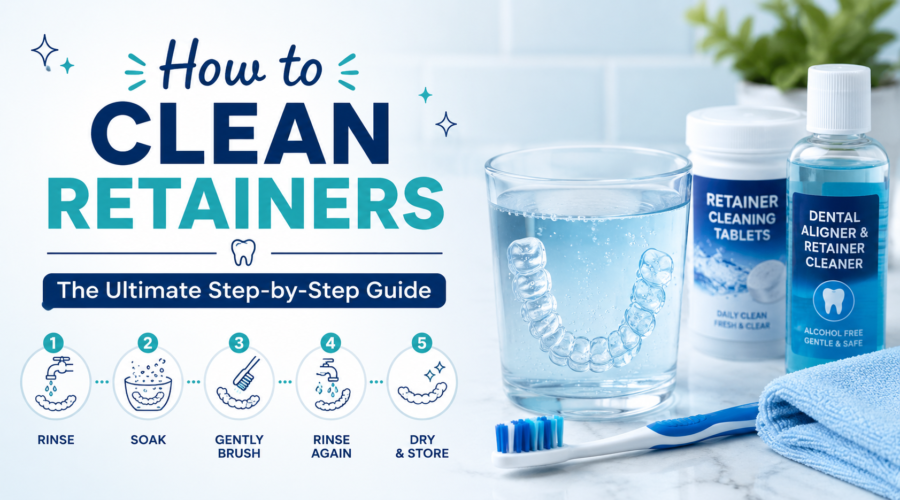
You finally did it. The braces are off, or you just finished your last set of clear aligners. You are staring at your beautifully straightened smile in the mirror, feeling incredibly proud. But your orthodontic journey isn’t entirely over. To keep that perfect smile exactly the way it is, your orthodontist has given you a crucial new appliance: your retainer.
While wearing your retainer as prescribed is non-negotiable, knowing how to clean retainers properly is just as critical. Your retainer lives in the warm, moist environment of your mouth, making it a prime target for bacteria, plaque, and calcium buildup. If neglected, it can become a breeding ground for oral bacteria, leading to bad breath, gum irritation, and even the deterioration of the appliance itself.
In this comprehensive, expert-backed guide, we will explore everything you need to know about retainer hygiene. From the step-by-step process of cleaning different types of retainers to the scientific reasons behind why certain cleaning methods work (and why others will ruin your appliance), this is the only guide you will ever need to master retainer care.
Why Proper Retainer Hygiene is Non-Negotiable
Before we dive into the exact steps of how to clean retainers, it is essential to understand the “why.” Many people assume that because a retainer is just a piece of plastic or wire, it doesn’t require the same level of meticulous care as their natural teeth. This is a dangerous misconception.
The Hidden Dangers of a Dirty Retainer
Your mouth is home to hundreds of species of bacteria. When you eat, drink, or simply go about your day, these bacteria combine with food particles and saliva to form a sticky, colorless film called plaque. When you insert your retainer, you are placing a foreign object directly into this bacterial ecosystem.
If you do not clean your retainer regularly, the plaque hardens into calculus (tartar). Unlike plaque, tartar cannot be brushed away at home; it requires professional scraping by a dentist. But the issues go far beyond just a cloudy-looking appliance.
- Halitosis (Bad Breath): The bacteria that accumulate on an unclean retainer release volatile sulfur compounds (VSCs). This is the primary culprit behind that “stinky” smell when you take your retainer out in the morning.
- Oral Infections and Thrush: A dirty retainer can harbor Candida albicans, the fungus responsible for oral thrush. Wearing a fungus-covered retainer can lead to painful white patches in your mouth, altered taste, and soreness.
- Gum Disease and Tooth Decay: The bacteria trapped against your teeth by a dirty retainer are constantly bathing your gums and enamel in acid. This significantly increases your risk of gingivitis and cavities.
- Premature Retainer Degradation: Calcium deposits and acidic bacterial byproducts can break down the materials of your retainer over time, causing clear plastic to become brittle or acrylic to warp and crack.
Understanding these risks makes it clear that learning how to clean retainers is not just about aesthetics; it is a fundamental pillar of your overall oral health.
How Often Should You Clean Your Retainer?
A common question orthodontists hear is, “How frequently do I actually need to clean this thing?” The answer depends on the type of cleaning you are doing. Retainer hygiene should be broken down into daily maintenance and weekly deep cleaning.
Daily Maintenance vs. Weekly Deep Cleaning
The Daily Routine (Every Single Day)
You should clean your retainer every single day, ideally every time you brush your teeth. When you take your retainer out to eat or brush, give it a quick rinse under lukewarm water. When you put it back in, or when you take it out in the morning, give it a gentle scrub. Daily cleaning removes the soft, sticky plaque before it has a chance to harden into stubborn tartar.
The Weekly Deep Clean (Once or Twice a Week)
In addition to your daily scrubbing, you need to perform a deep clean at least once a week. This involves soaking your retainer in a specialized cleaning solution to break down microscopic biofilms, neutralize odors, and dissolve early-stage calcium deposits. Think of daily cleaning as taking a quick shower, and weekly deep cleaning as doing a load of laundry. Both are necessary for optimal hygiene.
The Best Tools and Solutions for Cleaning Retainers
Walking down the dental aisle can be overwhelming. Do you need expensive ultrasonic cleaners? What about denture tablets? To answer how to clean retainers effectively, you only need a few simple, inexpensive items.
What You Need in Your Retainer Care Kit
- Mild, Unscented Liquid Dish Soap: This is the best-kept secret in orthodontic care. Mild liquid dish soap is incredibly effective at breaking down the lipid membranes of bacteria and removing the sticky protein pellicle that forms on retainers. It is non-abrasive and leaves no harmful residue if rinsed properly.
- A Soft-Bristled Toothbrush: You need a dedicated, ultra-soft bristled toothbrush for your retainer. Do not use the same toothbrush you use for your teeth.
- Retainer Cleaning Tablets: Commercially available retainer or denture cleaning tablets (such as Polident, Retainer Brite, or Efferdent) are excellent for weekly deep cleans. They use effervescent action to lift debris and contain mild oxidizing agents that kill bacteria.
- White Vinegar and Baking Soda: For a natural, DIY approach to deep cleaning, plain white distilled vinegar and baking soda are your best friends.
Comparison Table: Retainer Cleaning Solutions
| Cleaning Method | Best For | Pros | Cons |
|---|---|---|---|
| Mild Dish Soap | Daily brushing | Non-abrasive, cheap, highly effective at removing biofilm. | Doesn’t remove heavy calcium buildup. |
| Retainer Tablets | Weekly soaking | Effervescent action reaches crevices, kills bacteria, removes stains. | Can be expensive over time, some contain harsh chemicals. |
| White Vinegar | Deep cleaning / Descaling | Dissolves calcium/tartar, natural, inexpensive. | Smells strong, requires thorough rinsing. |
| Ultrasonic Cleaners | Deep cleaning | Uses sound waves to blast away debris without scrubbing. | High upfront cost, requires batteries or plugging in. |
Step-by-Step Guide: How to Clean Retainers by Type
Not all retainers are created equal. The method you use to clean a clear plastic retainer will differ from how you care for a wire-and-acrylic appliance, or a permanent bonded retainer. Here is the definitive guide on how to clean retainers based on the specific type you wear.
How to Clean Clear Retainers (Essix or Vivera)
Clear retainers are made from a thin, medical-grade thermoplastic. They are highly aesthetic but prone to scratching and clouding if treated harshly.
Daily Cleaning Steps:
- Wash Your Hands: Always start with clean hands to avoid transferring oils and bacteria to the plastic.
- Rinse Immediately: As soon as you remove the retainer, rinse it thoroughly under a gentle stream of lukewarm water. Never use hot water, as it will instantly warp the plastic.
- Apply Soap: Place a tiny drop of mild, unscented dish soap on your dedicated soft-bristled toothbrush.
- Gently Brush: Gently brush the outside and inside of the retainer. Pay special attention to the grooves that fit over your teeth. Use light, circular motions. Do not scrub aggressively.
- Rinse Thoroughly: Rinse the retainer under lukewarm water until all soap suds are completely gone.
- Clean Your Mouth: Brush and floss your teeth before reinserting the retainer. Putting a clean retainer into a dirty mouth defeats the purpose.
Weekly Deep Clean:
Once a week, dissolve a retainer cleaning tablet in a cup of lukewarm water. Submerge the retainer completely and let it soak for 10 to 15 minutes. Remove, rinse thoroughly with water, and dry before storing or wearing.
How to Clean a Hawley Retainer (Wire and Acrylic)
Hawley retainers consist of a durable acrylic plate and a metal wire that wraps across the front teeth. They are incredibly durable but have more nooks and crannies for bacteria to hide.
Daily Cleaning Steps:
- Rinse: Rinse the retainer under lukewarm water immediately upon removal.
- Brush the Wire: Using your soft-bristled brush and mild dish soap, gently scrub the metal wire. Pay attention to the areas where the wire bends and where it attaches to the acrylic.
- Brush the Acrylic: Gently scrub the acrylic plate. If it is a top retainer, make sure to clean the part that rests against your palate to remove the sticky mucin layer from your saliva.
- Rinse and Dry: Rinse completely to remove all soap residue.
Weekly Deep Clean:
Hawley retainers can be soaked in retainer cleaning tablets. However, because the metal wire can sometimes tarnish or accumulate hard water spots, you can also use a mixture of equal parts white vinegar and lukewarm water. Soak the retainer for 20 minutes to dissolve any calcium buildup, then brush gently and rinse thoroughly.
How to Clean a Permanent (Fixed) Retainer
Permanent retainers are a thin metal wire bonded directly to the back of your front teeth. Because they are fixed in your mouth, you cannot take them out to clean them. This makes learning how to clean retainers of this type uniquely challenging.
Daily Cleaning Steps:
- Use a Floss Threader or Ortho-Pick: Standard flossing is impossible with a wire in the way. You must thread your floss under the permanent wire using a floss threader or a specialized orthodontic flosser (like Superfloss). Floss between every single tooth.
- Interdental Brushes: Use a small interdental brush (like a Proxabrush) to slide under the wire and between the teeth. Move it back and forth to dislodge food debris.
- Angled Brushing: When brushing your teeth, angle your toothbrush bristles both above and below the bonded wire to sweep away plaque.
Weekly/Monthly Maintenance:
If you notice tartar building up around the composite resin that holds the wire in place, you cannot scrape it off yourself. You must visit your dentist for a professional cleaning. To help prevent buildup at home, use a water flosser on a low setting daily to blast away food particles from around the permanent wire.
Natural DIY Retainer Cleaning Hacks
If you prefer to avoid commercial chemicals or find yourself running out of retainer tablets, your kitchen pantry holds some of the best solutions for how to clean retainers naturally.
How to Clean Retainers with Baking Soda
Baking soda (sodium bicarbonate) is a natural deodorizer and has mild antibacterial properties. It is excellent for neutralizing the acids produced by oral bacteria.
The Method:
- Mix one tablespoon of baking soda with a half cup of lukewarm water.
- Stir until the baking soda is completely dissolved.
- Submerge your retainer in the solution for 15 to 20 minutes.
- Remove the retainer, give it a gentle brush with your soft toothbrush, and rinse thoroughly.
Expert Tip: You can also make a thin paste with baking soda and a few drops of water to gently scrub stubborn stains, but do this sparingly to avoid micro-scratches.
How to Clean Retainers with White Vinegar
White vinegar contains acetic acid, which is highly effective at breaking down calcium deposits (tartar) and killing certain strains of bacteria.
The Method:
- Mix equal parts white distilled vinegar and lukewarm water in a glass.
- Soak your retainer in the solution for 15 to 20 minutes. Do not exceed 30 minutes, as prolonged acid exposure can weaken some plastics.
- Remove the retainer and brush it gently with mild dish soap to remove the vinegar taste and loosened debris.
- Rinse extremely well with cool water before putting it back in your mouth.
How to Clean a Smelly Retainer (Troubleshooting)
Even with regular brushing, retainers can sometimes develop a stubborn, unpleasant odor. If you are wondering how to clean retainers that already smell bad, standard brushing won’t cut it. The odor is caused by trapped bacteria and biofilm that have penetrated the microscopic pores of the plastic.
The Deep Deodorizing Protocol:
- The Vinegar Soak: Start with the white vinegar soak mentioned above to kill the bacteria and dissolve the calcium matrix trapping the odor.
- The Baking Soda Bath: After rinsing the vinegar out, soak the retainer in a baking soda and water solution for another 15 minutes to neutralize any remaining acidic odors.
- Ultrasonic Cleaning: If the smell persists, invest in a handheld dental ultrasonic cleaner. The high-frequency sound waves create cavitation bubbles that physically blast the biofilm out of the microscopic pores of the plastic where brushes cannot reach.
- Replace if Necessary: If your clear retainer is deeply scratched, permanently cloudy, and still smells after these deep cleans, the plastic is degraded. It is time to contact your orthodontist for a replacement.
Common Mistakes to Avoid When Cleaning Retainers
Knowing what to avoid is just as important as knowing the right techniques. Many common household items and well-intentioned habits can permanently ruin your retainer. Here is what you must strictly avoid when figuring out how to clean retainers.
The Toothpaste Trap
This is the number one mistake people make. Toothpaste contains microscopic abrasive particles (like silica or calcium carbonate) designed to scrub stains off hard tooth enamel. Retainer plastic and acrylic are much softer than enamel. When you brush your retainer with toothpaste, you create thousands of tiny, invisible micro-scratches on the surface. These micro-scratches become perfect hiding spots for bacteria, making your retainer permanently cloudy and prone to terrible odors.
The Hot Water Hazard
It is a common myth that boiling a retainer will “sterilize” it. While heat does kill bacteria, the thermoplastics and acrylics used in orthodontics have low melting points. Exposing your retainer to hot water (anything above 140°F or 60°C) will cause the plastic to warp, shrink, or melt. A warped retainer will no longer fit your teeth properly, which can cause your teeth to shift. Always stick to lukewarm or cool water.
Alcohol-Based Mouthwash and Harsh Chemicals
Many people soak their retainers in mouthwash to freshen them up. However, most commercial mouthwashes contain high levels of alcohol and artificial dyes. Alcohol dries out the plastic and acrylic, making them brittle and prone to cracking. Furthermore, the artificial dyes can permanently stain clear retainers. Similarly, never use bleach or household cleaners, as they are toxic and can cause severe chemical burns to your oral tissues.
Expert Tips for Extending Your Retainer’s Lifespan
Learning how to clean retainers is only half the battle; proper handling and storage are equally vital to ensure your appliance lasts for years.
- Beware the “Napkin Trap”: The most common way retainers are lost is wrapping them in a paper napkin at a restaurant and accidentally throwing them away. Always carry a hard-shell, brightly colored retainer case. When it is not in your mouth, it must be in the case.
- Keep It Away from Pets: Dogs and cats are highly attracted to the scent of their owner’s saliva. If you leave your retainer on a nightstand, a curious pet may chew it to pieces. Keep your case out of reach of furry friends.
- Avoid Heat Exposure: Never leave your retainer case in a hot car, on a radiator, or in direct sunlight. The ambient heat can easily warp the plastic.
- Stay Hydrated: A dry mouth increases the acidity of your saliva and promotes bacterial growth. Drinking plenty of water keeps your saliva flowing, naturally washing away food particles and keeping your retainer cleaner.
- Follow Your Wear Schedule: Teeth have a natural memory and will attempt to shift back to their original positions as you age. Consistent wear as prescribed by your orthodontist ensures the retainer maintains its shape and function.
Frequently Asked Questions (FAQs)
1. Can I put my retainer in the dishwasher or washing machine?
Absolutely not. The high heat and harsh, abrasive detergents used in dishwashers and washing machines will instantly melt, warp, and chemically degrade your retainer. It will be destroyed beyond repair.
2. How long do retainers typically last?
The lifespan depends heavily on how well you clean and care for it. Clear retainers (Essix/Vivera) typically last 1 to 3 years. Hawley retainers can last 5 to 10 years, or even decades, if cared for properly. Permanent retainers can last 10+ years, but the composite bond may need occasional repair.
3. Can I use an ultrasonic cleaner for my retainer?
Yes, ultrasonic cleaners designed specifically for dental appliances are safe and highly effective. They use high-frequency sound waves in water to create microscopic cavitation bubbles that blast bacteria and debris off the surface without physical scrubbing.
4. What should I do if my retainer tastes like soap?
If your retainer tastes like soap after cleaning, you have not rinsed it thoroughly enough. Residual dish soap can cause gastrointestinal upset if swallowed. Always rinse your retainer under a strong stream of lukewarm water for at least 30 seconds after washing.
5. Can I drink water while wearing my clear retainer?
Yes, drinking plain, cold, or room-temperature water while wearing your clear retainer is perfectly fine. However, you should never drink anything sugary, acidic, or hot while wearing it, as the liquid will pool around your teeth and cause rapid decay.
6. How do I get the white crust off my retainer?
That white crust is calcium tartar. You can dissolve it by soaking your retainer in a 50/50 mixture of white vinegar and lukewarm water for 20 minutes, then gently brushing it with dish soap. For severe buildup, visit your dentist for professional scaling.
7. Is it safe to use bleach to clean my retainer?
No. Bleach is highly toxic and corrosive. It can break down the structural integrity of the retainer materials and cause severe chemical burns to your gums and throat if ingested. Stick to mild dish soap, vinegar, or specialized retainer tablets.
8. Why does my retainer smell even after I brush it?
If it still smells, bacteria have penetrated deep into the porous material of the plastic. You need a deep chemical clean using a vinegar soak or an ultrasonic cleaner. If the smell persists, the plastic is likely degraded and needs replacing.
Conclusion
Learning how to clean retainers is a small daily investment that yields massive, lifelong dividends. Your retainer is the guardian of your beautiful, straight smile. By treating it with the same respect and care that you give your natural teeth, you ensure that it remains invisible, odorless, and effective for years to come.
Remember the golden rules of retainer hygiene: clean it daily with mild, unscented dish soap and a soft-bristled brush; deep clean it weekly using retainer tablets or a white vinegar soak; never use toothpaste, hot water, or harsh chemicals; and always store it safely in a hard case whenever it is not in your mouth.
Consistency is the key to success. Make your retainer cleaning routine a seamless part of your morning and evening rituals. By following this comprehensive guide, you will avoid the pitfalls of poor oral hygiene, protect your investment in orthodontics, and keep your confidence shining bright with a perfectly maintained smile. Take care of your retainer, and it will take care of your smile!