

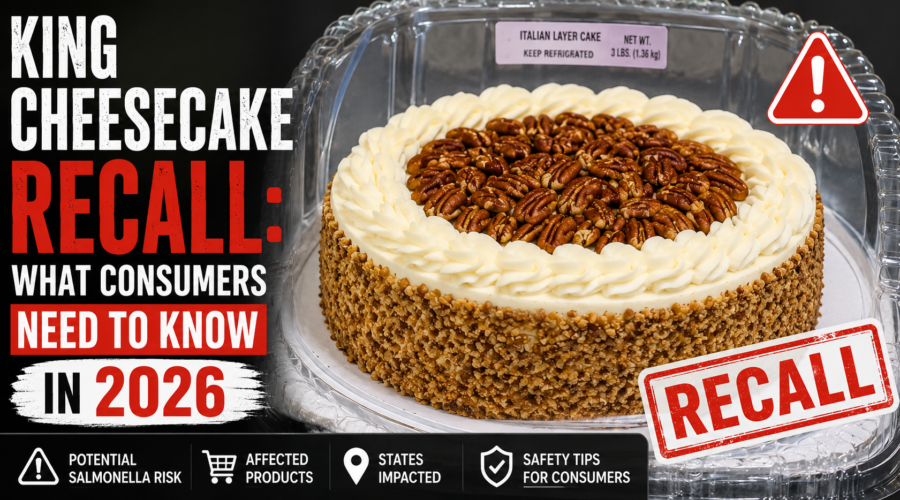
If you’ve searched for “king cheesecake recall” recently, you’re not alone. This query has trended as consumers across multiple U.S. states seek clarity about food safety concerns involving King Cheesecake Company, Inc. products. Whether you purchased these items months ago or are just discovering this information now, this comprehensive guide provides accurate, FDA-sourced details to help you protect your family.
Important Note Up Front: The King Cheesecake recall was initiated in July 2025 and classified as a Class I recall by the U.S. Food and Drug Administration (FDA) in August 2025. While not a “new” 2026 event, this recall remains relevant because affected products may still be in consumers’ freezers, and understanding food recall protocols helps you stay safe year-round.
Understanding the King Cheesecake Recall: Key Facts at a Glance
Before diving into details, here are the essential facts about the king cheesecake recall:
| Category | Details |
|---|---|
| Company | King Cheesecake Company, Inc. (Houston, Texas) |
| Recall Initiated | July 18, 2025 (voluntary) |
| FDA Classification | Class I Recall (highest risk level) |
| Reason for Recall | Potential Salmonella contamination in pecan ingredients |
| Affected Products | 6 ready-to-eat cake products |
| Production Dates | June 20 – July 14, 2025 |
| Distribution States | Texas, Louisiana, Oklahoma, Florida, Illinois, Alabama |
| Reported Illnesses | None confirmed as of latest FDA update |
| Current Status | Listed as ongoing in FDA databases (verify for latest) |
Source: U.S. FDA Enforcement Reports, Event ID 97299
Why Was the King Cheesecake Recall Issued?
The Salmonella Connection
The king cheesecake recall was triggered by the potential presence of Salmonella in pecans supplied to King Cheesecake Company, Inc. Salmonella is a bacteria that can cause serious and sometimes fatal infections, particularly in young children, frail or elderly people, and others with weakened immune systems.
According to the FDA, the contamination concern originated from a supplier-level issue. Navarro Pecan Holdings (Corsicana, Texas) recalled over 32,000 pounds of pecan products in August 2025 due to potential Salmonella contamination. King Cheesecake Company, which used these pecans as ingredients, proactively initiated its voluntary recall as a precautionary measure.
What Is a Class I Recall?
The FDA classifies recalls into three categories based on health risk:
- Class I: Reasonable probability that use of the product will cause serious adverse health consequences or death (This is the King Cheesecake classification)
- Class II: Use may cause temporary or medically reversible adverse health consequences
- Class III: Use is unlikely to cause adverse health consequences
A Class I designation doesn’t mean illness has occurred—it means the potential risk is severe enough to warrant immediate action. This classification underscores why the king cheesecake recall deserves consumer attention, even months after the initial announcement.
Affected Products: Complete List with Item Numbers
If you’re checking your pantry or freezer, here are the exact products included in the king cheesecake recall. All items were manufactured between June 20 and July 14, 2025:
🍰 Recalled King Cheesecake Products
- Italian Layer Cake
- Item Number: 1071
- Packaging: Various retail sizes
- Date Code Location: Printed on bottom or side of packaging
- Carrot Layer Cake
- Item Number: 1312
- Packaging: Various retail sizes
- Date Code Location: Printed on bottom or side of packaging
- Tres Leches Cheesecake
- Item Number: 99272
- Packaging: Various retail sizes
- Date Code Location: Printed on bottom or side of packaging
- Hummingbird Layer Cake
- Item Number: 3145
- Packaging: Various retail sizes
- Date Code Location: Printed on bottom or side of packaging
- Chocolate Tres Leches Cheesecake
- Item Number: 99273
- Packaging: Various retail sizes
- Date Code Location: Printed on bottom or side of packaging
- Assorted Layer Cake
- Item Number: 2485
- Packaging: Various retail sizes
- Date Code Location: Printed on bottom or side of packaging
🔍 How to Identify Affected Products
- Check the item number (listed above) on the product label
- Verify the manufacturing date range: June 20 – July 14, 2025
- Look for “King Cheesecake Company, Inc.” and “Houston, TX” on packaging
- Products were distributed to retail locations and food service establishments in six states
Tip: If packaging is damaged or labels are missing, and you’re unsure of the purchase date, it’s safest to discard the product.
Health Risks: Understanding Salmonella Exposure
Symptoms to Watch For
If someone consumed a product contaminated with Salmonella, symptoms typically appear 12 to 72 hours after exposure and may include:
- Diarrhea (sometimes bloody)
- Fever (often 101°F–104°F / 38.3°C–40°C)
- Abdominal cramps
- Nausea and vomiting
- Headache
Most healthy adults recover within 4–7 days without specific treatment. However, the infection can be severe for vulnerable populations.
Who Is at Higher Risk?
The CDC and FDA emphasize that certain groups face greater complications from Salmonella:
✅ Infants and children under age 5
✅ Adults aged 65 and older
✅ Pregnant individuals
✅ People with weakened immune systems (due to cancer treatment, HIV/AIDS, organ transplants, diabetes, etc.)
✅ Individuals taking medications that reduce stomach acid
In rare cases, Salmonella can spread from the intestines to the bloodstream and other body sites, requiring hospitalization and antibiotic treatment.
Important Clarification
As of the latest FDA update, no illnesses have been confirmed as directly linked to the king cheesecake recall. This recall was initiated as a precautionary measure based on supplier testing results. However, the Class I classification means the potential risk warranted immediate action to prevent possible harm.
Disclaimer: This information is for educational purposes only and does not constitute medical advice. If you suspect foodborne illness, contact your healthcare provider or local health department immediately.
What to Do If You Have Recalled Products: Step-by-Step Guide
✅ Immediate Actions
- Stop consuming any King Cheesecake products matching the recalled item numbers and date ranges
- Check your storage areas: refrigerator, freezer, pantry—even if purchased months ago
- Verify packaging details: item number, manufacturing date, company name
- Do not rely on appearance or smell: Salmonella-contaminated food often looks, smells, and tastes normal
🗑️ Safe Disposal Instructions
If you confirm you have a recalled product:
- Place the product in a sealed plastic bag
- Put the sealed bag in an outdoor trash container with a tight lid
- Wash hands thoroughly with soap and warm water after handling
- Clean any surfaces, containers, or utensils that contacted the product using hot, soapy water or a household disinfectant
💰 Return or Refund Options
Most retailers that carried these products offer refunds even without a receipt:
- Return the product (or packaging with item number visible) to the place of purchase
- Contact the store’s customer service department for guidance
- Keep documentation of your return for your records
🩺 If You’ve Already Consumed the Product
- Monitor for symptoms for 72 hours after consumption
- Stay hydrated if mild symptoms develop
- Contact a healthcare provider if you experience:
- High fever (>102°F / 39°C)
- Blood in stool
- Prolonged vomiting preventing fluid intake
- Symptoms lasting more than 3 days
- Inform your provider about the potential exposure to recalled products
Timeline of the King Cheesecake Recall
Understanding the chronology helps contextualize why this recall remains relevant in 2026:
📅 Key Dates
| Date | Event |
|---|---|
| June 20 – July 14, 2025 | Affected products manufactured |
| July 18, 2025 | King Cheesecake Company initiates voluntary recall |
| August 1, 2025 | Navarro Pecan Holdings recalls pecan ingredients (supplier-level action) |
| August 7, 2025 | FDA classifies recall as Class I |
| Late 2025 – Early 2026 | Recall remains active in FDA enforcement databases |
| March 2026 | Increased media coverage as consumers discover products in long-term storage |
| May 2026 | FDA lists recall status as “ongoing” (verify current status via official channels) |
Why Recalls Stay “Active” for Months
Food recalls aren’t always resolved quickly because:
- Frozen products can remain in consumers’ homes for many months
- Retailers may still have inventory in back storage
- The FDA keeps recall notices public until verification that all reasonable efforts to remove products are complete
- Consumers may discover recalled items during pantry clean-outs
This extended timeline is why searching for “king cheesecake recall” in 2026 still yields relevant safety information.
How to Stay Informed About Food Recalls in 2026
🔔 Official Resources to Bookmark
- FDA Recall Enforcement Reports
🔗 accessdata.fda.gov/scripts/ires/
Search by company name, product type, or recall date - FDA Safety Alerts & Recalls Page
🔗 fda.gov/safety/recalls
Subscribe to email alerts for real-time notifications - CDC Food Safety Portal
🔗 cdc.gov/foodsafety
Symptom guidance, prevention tips, outbreak tracking - USDA Food Recall Updates (for meat/poultry/egg products)
🔗 fsis.usda.gov/recalls
📱 Proactive Safety Habits
- Register products with manufacturers when possible (enables direct recall notifications)
- Keep receipts or take photos of product labels for high-risk items
- Follow verified food safety accounts on social media (FDA, CDC, state health departments)
- When in doubt about a product’s safety: When in doubt, throw it out
Preventing Foodborne Illness: Best Practices Beyond Recalls
While recalls address specific contamination events, everyday food safety habits protect your household year-round:
🧼 Kitchen Hygiene Fundamentals
- Wash hands with soap and warm water for 20 seconds before handling food
- Separate raw meats from ready-to-eat foods during storage and prep
- Use a food thermometer to ensure proper cooking temperatures
- Refrigerate perishables within 2 hours (1 hour if ambient temperature >90°F/32°C)
- Clean countertops, cutting boards, and utensils after each use
🥶 Safe Storage Guidelines
| Food Type | Refrigerator (40°F/4°C or below) | Freezer (0°F/-18°C or below) |
|---|---|---|
| Cheesecakes (commercial) | 3–5 days after opening | 1–2 months for best quality |
| Layer cakes with cream/frosting | 3–4 days | 2–3 months |
| Pecans/nuts (opened) | 4–6 months | Up to 1 year |
| Leftovers (general) | 3–4 days | 2–3 months |
Source: USDA Food Safety and Inspection Service
🛒 Smart Shopping Practices
- Check “sell by” and “use by” dates before purchasing
- Inspect packaging for damage, swelling, or leaks
- Buy refrigerated/frozen items last during shopping trips
- Transport perishables in insulated bags if travel time exceeds 30 minutes
Frequently Asked Questions: King Cheesecake Recall
❓ Is the king cheesecake recall still active in 2026?
The recall was initiated in July 2025. The FDA may still list it as “ongoing” until verification that all reasonable removal efforts are complete. Always check the FDA’s official recall database for the most current status.
❓ Can I eat recalled products if I freeze them?
No. Freezing does not kill Salmonella bacteria. If a product is part of a recall, do not consume it regardless of storage method.
❓ How do I know if my illness is related to the recall?
Only public health officials can confirm links between illnesses and specific products through laboratory testing and epidemiological investigation. If you suspect foodborne illness, contact your healthcare provider and local health department.
❓ Are other King Cheesecake products safe?
Only the six specific items with item numbers listed above and manufactured between June 20 – July 14, 2025, are included in this recall. Products with different item numbers, dates, or from other manufacturers are not affected.
❓ Why use pecans if they posed a risk?
Food manufacturers rely on complex supply chains. When a supplier issue is identified, responsible companies initiate recalls proactively—even before illnesses are reported—to protect consumers. This is a strength of the U.S. food safety system, not a failure.
Conclusion: Staying Safe Through Informed Action
The king cheesecake recall serves as an important reminder that food safety is a shared responsibility among manufacturers, regulators, retailers, and consumers. While this specific recall originated in 2025, its lessons remain valuable:
🔹 Verify before consuming: Always check product details against official recall notices
🔹 Act promptly: If you have a recalled item, dispose of it safely and seek refunds
🔹 Stay informed: Bookmark official FDA and CDC resources for real-time updates
🔹 Practice prevention: Daily food safety habits reduce risk beyond recall events
If you found this guide helpful, please share it with friends or family who may have purchased King Cheesecake products. Spreading accurate, sourced information helps protect entire communities.
Last Updated: May 2026
Sources: U.S. Food and Drug Administration (FDA), Centers for Disease Control and Prevention (CDC), USDA Food Safety and Inspection Service
⚠️ Important Disclaimer
This article is for informational purposes only and does not constitute medical, legal, or professional food safety advice. Content is based on publicly available FDA enforcement reports and official public health guidance as of May 2026. Recall statuses may change; always verify current information directly through official government channels (fda.gov, cdc.gov). If you suspect foodborne illness, contact your healthcare provider or local health department immediately. The author and publisher disclaim liability for any actions taken based on this information.