
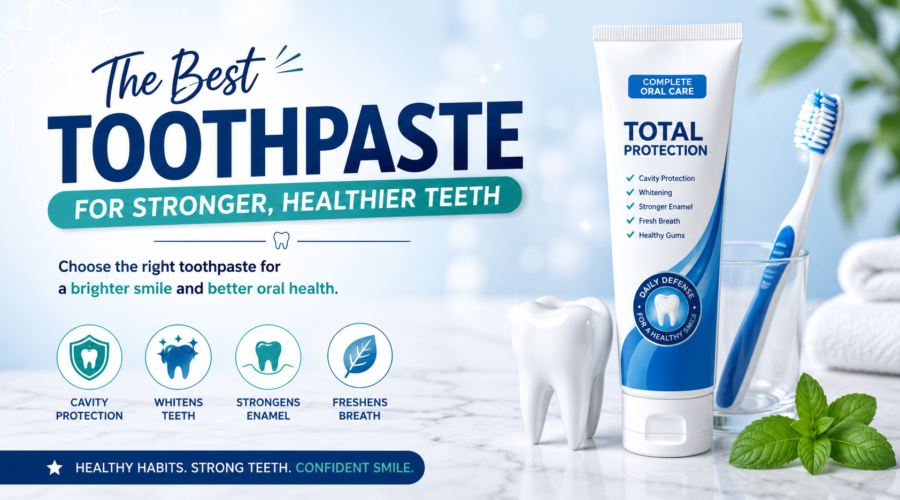
Best Toothpaste for Teeth – Your toothpaste does more than just make your breath smell fresh. It is your first line of defence against cavities, gum disease, enamel erosion, and tooth sensitivity. But standing in a pharmacy aisle staring at dozens of colourful tubes can feel genuinely overwhelming. Whitening? Sensitive? Natural? Charcoal? With fluoride or without?
The truth is — there is no single “best” toothpaste for everyone. The right one depends on your teeth, your concerns, and your lifestyle. This guide breaks it all down in plain language so you can make a smart, informed decision — and finally stop guessing at checkout.
Why Your Choice of Toothpaste Actually Matters
Most people pick toothpaste based on brand loyalty, packaging, or whatever is on sale. But the ingredients inside that tube have a real, measurable impact on your oral health over time.
A good toothpaste can:
- Strengthen enamel and prevent cavities
- Reduce sensitivity to hot, cold, and sweet foods
- Fight plaque and early-stage gum disease
- Whiten teeth gradually without damaging enamel
- Freshen breath by tackling bacteria, not just masking odour
A poor choice — or the wrong type for your needs — can leave gaps in your protection, irritate sensitive gums, or even cause enamel wear if used incorrectly.
Dentists emphasise that brushing technique and consistency matter most, but the right toothpaste formula absolutely complements your efforts. Think of it as the fuel that powers your brushing routine.
What to Look for in a Good Toothpaste
Before diving into specific products and types, here are the key ingredients and markers to understand:
Fluoride
Fluoride is the gold standard of cavity prevention. It remineralises enamel, making teeth more resistant to acid attacks from bacteria and sugar. Most dentists and health organisations worldwide — including the WHO, ADA, and Indian Dental Association — recommend fluoride toothpaste for both adults and children above age 2.
Standard adult toothpaste contains 1,000–1,450 ppm (parts per million) of fluoride. If you have a high risk of cavities, your dentist may recommend a prescription-strength option above 1,500 ppm.
Abrasives
Abrasive particles (like hydrated silica, calcium carbonate, or sodium bicarbonate) gently scrub the tooth surface to remove stains and plaque. Every toothpaste has them. The key is the RDA score — Relative Dentin Abrasivity. A score below 70 is considered gentle, 70–100 is moderate, and anything above 150 is considered high. For daily use, staying below 100 is ideal.
Potassium Nitrate or Stannous Fluoride
Both of these are active ingredients in sensitivity toothpastes. Potassium nitrate works by calming the nerves inside the tooth. Stannous fluoride creates a protective barrier over exposed dentin. If you wince while eating ice cream or drinking hot chai, look for one of these on the label.
Antibacterial Agents
Ingredients like triclosan (less common now), stannous fluoride, and zinc citrate help reduce bacteria in the mouth, lower plaque formation, and protect against gingivitis.
Hydroxyapatite (HAp)
A newer, fluoride-alternative ingredient gaining popularity in Japan and now globally. Hydroxyapatite is a naturally occurring mineral that makes up about 97% of tooth enamel. Studies show it can remineralise teeth and reduce sensitivity. It is a good option for those who prefer fluoride-free products without sacrificing protection.
Types of Toothpaste Explained
1. Fluoride Toothpaste (Everyday Use)
This is the standard, go-to option for most people. Fluoride toothpaste builds and maintains enamel strength, prevents cavities, and keeps your teeth healthy day to day. If you have no specific dental concerns, a reliable fluoride toothpaste brushed twice daily is all you need.
Good options in this category tend to be affordable, widely available, and consistently effective. Look for the ADA seal or BIS approval in India as a sign of tested efficacy.
2. Whitening Toothpaste
Whitening toothpastes work in two main ways: physical abrasion to remove surface stains, or chemical agents like hydrogen peroxide and sodium tripolyphosphate that break down stain molecules.
Here is the honest truth about whitening toothpaste: it will not change the natural colour of your teeth or work like professional bleaching. What it can do — very effectively — is remove the stains caused by tea, coffee, red wine, and tobacco over time.
If you are an avid chai drinker (and let us be honest, most of us are), a whitening toothpaste used a few times a week can visibly brighten your smile over 4–6 weeks.
Important note: Do not use a high-abrasion whitening paste every single day, especially if you already have sensitive teeth or thin enamel.
3. Sensitive Toothpaste
Sensitivity is one of the most common dental complaints in India, affecting an estimated 1 in 3 adults. It happens when the dentin — the softer layer beneath enamel — becomes exposed, usually due to enamel erosion, gum recession, or aggressive brushing.
Sensitive toothpastes work by either blocking the microscopic channels (dentinal tubules) in dentin or by desensitising the nerve signals inside the tooth.
Key ingredients to look for: potassium nitrate, stannous fluoride, or arginine. Brands like Sensodyne (Rapid Relief or Repair & Protect), Colgate Sensitive Pro-Relief, and Oral-B Sensitivity & Gum Balance are among the most trusted in this category.
Pro tip: For sensitive toothpaste to work, you need to use it consistently for at least 2–4 weeks. It is not a one-time fix.
4. Gum Care Toothpaste
Gingivitis — early gum disease marked by redness, swelling, and bleeding — is extremely common and often preventable. Gum care toothpastes are formulated with antibacterial agents that target the bacteria responsible for gum inflammation.
Stannous fluoride and zinc citrate are the most effective antibacterial ingredients for this purpose. Colgate Total, Parodontax, and Oral-B Gum & Enamel Repair are popular and well-reviewed options.
Signs you may need a gum care formula: your gums bleed when you brush, they look puffy or red, or your dentist has mentioned early gingivitis.
5. Natural and Herbal Toothpaste
The demand for natural oral care has grown significantly in India — and globally — over the last five years. Brands like Patanjali Dant Kanti, Vicco Vajradanti, Himalaya Herbal, and international names like Hello and Dr. Bronner’s offer toothpastes made with plant-based ingredients like neem, clove, miswak, coconut oil, turmeric, and baking soda.
Many of these are fluoride-free. They can be effective for general oral hygiene and freshness, and are preferred by those seeking chemical-free alternatives. However, if you are prone to cavities, a fluoride-free formula may not provide adequate decay protection on its own. Discuss this with your dentist.
6. Children’s Toothpaste
Children need age-appropriate toothpaste — not a miniature version of adult formulas. For children under 6, fluoride content should be lower (typically 500–1,000 ppm) to reduce the risk of dental fluorosis (white spots on developing teeth from excess fluoride intake). Children’s toothpastes also come in milder flavours and are designed to be gentler on tender gums.
Brands like Colgate Kids, Oral-B Kids, and Pediflor are formulated for young teeth. Always supervise brushing until your child can spit reliably — around age 6–7.
7. Charcoal Toothpaste
Charcoal toothpaste has had a viral moment on social media, with bold claims of detoxifying, whitening, and deep-cleaning the mouth. The reality is more nuanced.
Activated charcoal is highly abrasive. While it can remove surface stains short-term, there is limited clinical evidence supporting its long-term safety or efficacy. Most charcoal toothpastes do not contain fluoride, which is a significant concern for cavity prevention.
If you enjoy charcoal toothpaste for occasional use and notice no sensitivity, that is generally fine. But it should not replace a fluoride toothpaste as your daily formula.
Best Toothpaste Picks for Different Needs (India 2025)
Best Overall Daily Toothpaste
Colgate Total 12 — Contains stannous fluoride, fights bacteria on teeth, gums, tongue, and cheeks. One of the most researched and dentist-recommended formulas globally.
Best for Cavity Prevention
Colgate Strong Teeth / MaxFresh — Classic fluoride protection at an accessible price point. A staple in Indian households for good reason.
Best for Sensitive Teeth
Sensodyne Repair & Protect — Contains stannous fluoride for both sensitivity relief and enamel repair. One of the most consistently effective options backed by clinical studies.
Best Whitening Toothpaste
Colgate Optic White — Contains hydrogen peroxide and is lower in abrasion than many competitors. Noticeably reduces tea and coffee stains with consistent use.
Best for Gum Health
Parodontax Clean Mint — Contains stannous fluoride specifically formulated to reduce bleeding gums. Widely used by periodontists.
Best Natural/Herbal Option
Himalaya Botanique Complete Care — Fluoride-free but contains neem extract and pomegranate, both of which have evidence-backed antimicrobial properties. A solid choice for those committed to natural formulas.
Best for Kids (Ages 2–6)
Colgate Kids Bubble Fruit — Low fluoride (500 ppm), mild flavour, and no artificial colours. Encourages regular brushing through child-friendly taste.
Best Premium Option
Marvis Classic Strong Mint — An Italian luxury toothpaste with a devoted following. Excellent formulation, pleasant texture, and a beautiful packaging experience. No fluoride in some variants — check the label.
Common Toothpaste Myths — Debunked
“More foam = better clean” False. Foam is produced by sodium lauryl sulphate (SLS), a foaming agent. It has no cleaning function. Some people even avoid SLS because it can cause canker sores.
“Natural toothpaste is always safer” Not necessarily. Some natural pastes are highly abrasive. Others lack fluoride, leaving teeth unprotected against cavities.
“Whitening toothpaste damages teeth” Only if the abrasion level is too high for your enamel condition. Most mainstream whitening pastes are within safe RDA limits when used as directed.
“You need a different toothpaste for morning and night” You do not need two different kinds. However, some people prefer a fresher mint paste in the morning and a sensitive or repair formula at night — especially since fluoride has more time to work while you sleep and produce less saliva.
“Expensive toothpaste is always better” Not necessarily. Many budget toothpastes with fluoride perform just as well clinically as premium products. The key is the active ingredients, not the price or packaging.
How Much Toothpaste Should You Actually Use?
This is a surprisingly important question. Most people use far too much.
For adults: a pea-sized amount (about 1.5 grams) is all that is needed for each brushing.
For children under 3: a tiny smear — no larger than a grain of rice. For children 3–6: a pea-sized amount.
Using more toothpaste does not make brushing more effective. It wastes product, increases fluoride exposure unnecessarily for children, and — thanks to clever marketing — trains you to buy more.
How to Brush Properly for Maximum Effect
Even the best toothpaste cannot compensate for poor technique. Here is a quick reminder:
Brush for a full two minutes — most people stop at 45 seconds. Use a soft-bristled toothbrush and gentle, circular motions. Cover all surfaces: outer, inner, and chewing surfaces. Do not forget your tongue and the gum line. Spit out the toothpaste but do not rinse immediately — letting fluoride remain on your teeth for a few minutes after brushing significantly increases its effectiveness.
When to See a Dentist About Your Toothpaste Choice
Your toothpaste is supportive, not diagnostic. If you are experiencing persistent pain, gum bleeding that does not improve after two weeks of gum care toothpaste, white spots on teeth, unusual tooth discolouration, or chronic bad breath — these are signs to speak to a dentist, not switch toothpaste formulas.
A dentist can also recommend prescription-strength fluoride toothpaste, professional-grade sensitivity relief, or specific formulations for conditions like dry mouth or acid reflux.
Summary: Which Toothpaste Is Best for You?
| Your Concern | What to Look For | Recommended Ingredient |
|---|---|---|
| Everyday protection | Standard fluoride toothpaste | Sodium fluoride (1,000–1,450 ppm) |
| Sensitivity | Sensitive formula | Potassium nitrate or stannous fluoride |
| Whitening | Moderate-abrasion whitening | Hydrogen peroxide or sodium tripolyphosphate |
| Gum health | Antibacterial formula | Stannous fluoride or zinc citrate |
| Natural preference | Herbal or fluoride-free | Neem, charcoal, hydroxyapatite |
| Children | Low-fluoride kids formula | 500–1,000 ppm sodium fluoride |
Final Thoughts
The best toothpaste for your teeth is the one that matches your specific oral health needs — and one you will actually use consistently, twice a day, for two full minutes.
If you have no specific concerns, a simple fluoride toothpaste from a trusted brand does an excellent job. If sensitivity, whitening, gum health, or natural ingredients matter to you, there are well-formulated options in every category.
Do not let marketing overwhelm you. Read the active ingredient list, match it to your need, and stick to a routine. Your teeth will thank you in the years to come.
And if you are ever unsure — your dentist is the best person to guide you. Even a brief conversation at your next check-up can save you years of guesswork (and dental bills).
This article is for informational purposes only and does not constitute professional dental advice. Consult a registered dentist for personalised oral health guidance.